AI Email App: The Complete Guide for 2026
Discover how AI email apps are transforming inbox management in 2026. Learn key features, top tools, and how to choose the right AI email solution for your workflow.

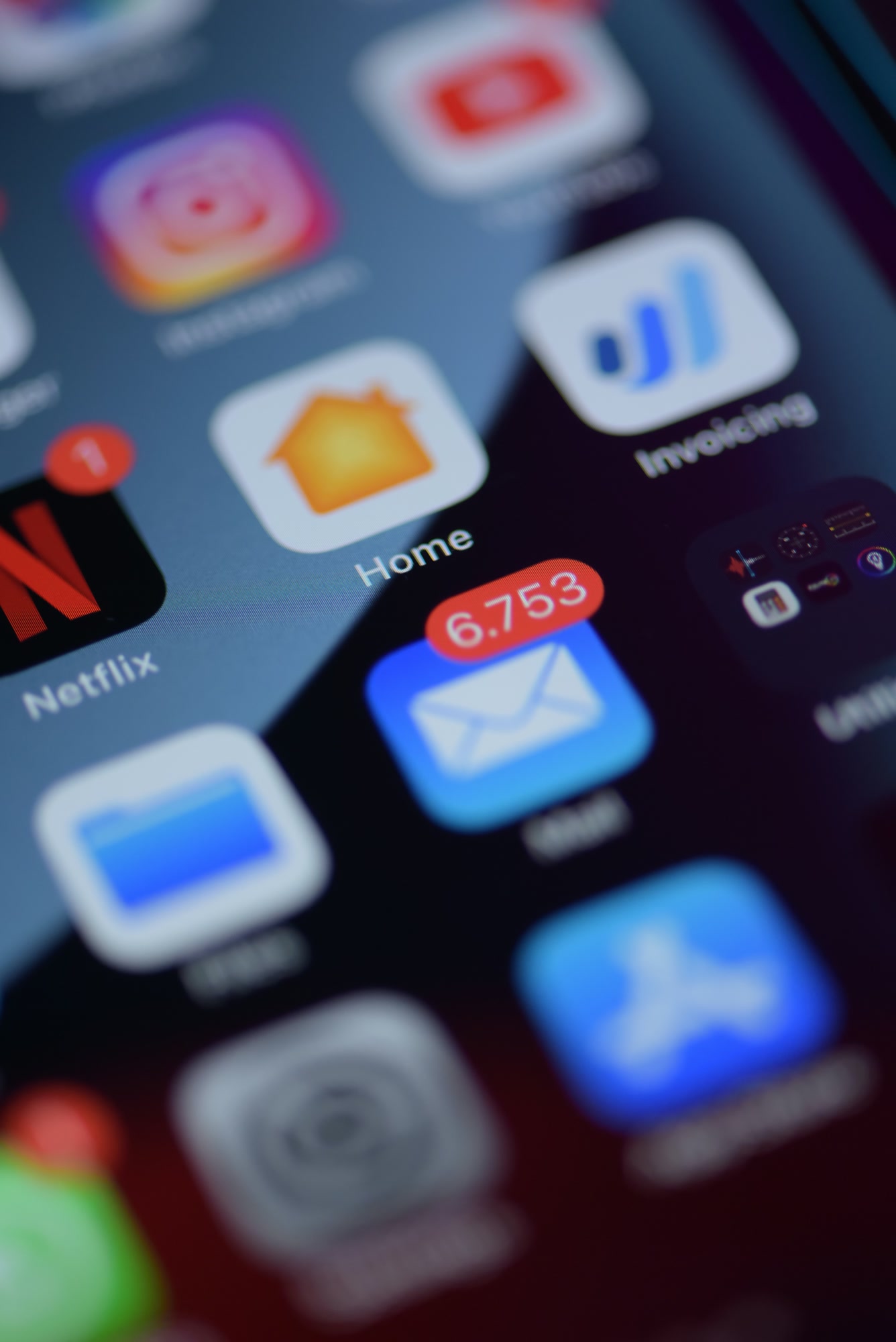
The average professional receives 121 emails per day and spends nearly 28% of their workweek managing their inbox — time that could otherwise go toward deep work, strategy, and collaboration. In 2026, AI email apps have moved from novelty to necessity, fundamentally changing how individuals and teams interact with one of the oldest digital communication tools. Whether you're drowning in unread messages or simply want to respond faster without sacrificing quality, an AI email app can be the most impactful productivity upgrade you make this year.
TL;DR: Key Takeaways
- An AI email app uses machine learning and natural language processing to automate sorting, drafting, summarizing, and prioritizing emails.
- The best AI email apps in 2026 go beyond basic filtering — they understand context, tone, and intent.
- Core features to look for include smart classification, AI-powered replies, email summarization, spam blocking, and calendar integration.
- Security certifications (like CASA Tier 2) and multilingual support are critical differentiators for enterprise and global teams.
- Choosing the right AI email app depends on your team size, workflow complexity, and integration requirements.
What Is an AI Email App?
An AI email app is an email client or platform that incorporates artificial intelligence — specifically large language models (LLMs), natural language processing (NLP), and machine learning — to automate and enhance how users manage their email communication. Unlike traditional email clients such as Gmail or Outlook, which rely on manual rules and basic filters, AI email apps learn from your behavior, understand the semantic meaning of messages, and take intelligent actions on your behalf.
In practical terms, this means an AI email app can do things like automatically classify an incoming message as a newsletter, urgent client request, or team update — without any manual tagging. It can draft a contextually appropriate reply in your tone and style, summarize a 40-email thread into three bullet points, or block sophisticated spam that bypasses traditional filters. The intelligence layer sits on top of your existing email infrastructure, augmenting your capability without requiring you to change how you send or receive mail.
Core Features That Define a Great AI Email App in 2026
Not all AI email apps are created equal. As the market has matured in 2026, the gap between surface-level AI features and genuinely intelligent systems has widened. Here are the capabilities that separate best-in-class platforms from the rest:
Smart Email Classification
Smart classification goes far beyond Gmail's basic Promotions/Social/Primary tab system. Advanced AI email apps analyze sender reputation, message content, historical interaction patterns, and urgency signals to route emails into meaningful, actionable categories. This means your inbox surfaces only what genuinely requires your attention — reducing cognitive load before you've even opened a single message.
AI-Powered Reply Generation
AI-generated replies have evolved dramatically since the early days of Google's Smart Reply. In 2026, top AI email apps generate full, contextually nuanced responses that match your writing style, reference relevant prior exchanges, and adapt tone based on the recipient — whether that's a client, a colleague, or a vendor. You review and send; the AI does the heavy lifting of drafting.
Email Summarization
Long email threads are one of the biggest productivity killers in modern work. Email summarization condenses multi-day, multi-participant threads into a concise briefing — key decisions made, outstanding action items, and important context — so you can get up to speed in seconds rather than minutes. This feature alone can reclaim hours each week for knowledge workers managing complex projects.
Spam Blocking and Quarantine
Traditional spam filters block known bad actors. AI-powered spam blocking — sometimes called a blackhole feature — uses behavioral analysis and sender trust scoring to catch sophisticated phishing attempts, social engineering emails, and cold outreach that bypasses rule-based systems. A quarantine layer gives you visibility and control over blocked messages without cluttering your primary inbox.
Meeting Scheduling and Calendar Integration
One of the most time-consuming email tasks is the back-and-forth of scheduling meetings. AI email apps with native calendar integration can detect scheduling intent in an email, propose available time slots, and handle confirmations automatically — eliminating the entire scheduling thread before it starts.
AI Email App vs. Traditional Email Client: A Real Comparison
Many professionals wonder whether upgrading from a well-configured Gmail or Outlook setup is worth the investment. The answer increasingly depends on volume and complexity. If you receive fewer than 30 emails per day and most are from a small, consistent set of contacts, a traditional client with good filters may suffice. But for professionals managing 100+ emails daily, coordinating across multiple projects and stakeholders, the productivity delta is significant.
- Traditional clients (Gmail, Outlook): Manual organization, rule-based filtering, basic smart replies, no deep context understanding.
- Speed-focused email apps (Superhuman, Spark Mail): Faster keyboard-driven workflows, light AI features, but limited automation depth.
- Full AI email apps (Icebox, Notion Mail, HEY): Deep automation, contextual intelligence, proactive inbox management, and integrated AI workflows.
The future of email isn't just sending faster — it's understanding more. AI email apps that grasp context, intent, and urgency are the ones that will actually give professionals their time back.
Icebox Product Team, 2026
What to Look for When Choosing an AI Email App
With dozens of AI email tools on the market in 2026, choosing the right one requires more than a feature checklist. Here are the critical evaluation criteria that enterprise buyers, team leads, and individual professionals should prioritize:
- Security and compliance: Look for platforms with recognized certifications. CASA (Cloud Application Security Assessment) Tier 2 certification, for example, indicates rigorous third-party security validation — essential for handling sensitive business communication.
- Multilingual support: Global teams need an AI email app that operates fluently across languages. Platforms supporting 20+ languages have a meaningful operational advantage over English-only competitors.
- Integration depth: The app should connect seamlessly with your existing stack — CRM, project management tools, calendar systems, and video communication platforms.
- Customization and control: One-size-fits-all AI is a liability. Choose a platform that lets you tune classification rules, train reply styles, and configure quarantine thresholds to match your workflow.
- Privacy and data handling: Understand whether your email data is used to train models, who has access to your communications, and where data is stored geographically.
- Learning curve and onboarding: The best AI email app is the one your team will actually use. Evaluate onboarding support, UI intuitiveness, and available training resources.
How AI Email Apps Are Evolving: Trends to Watch in 2026
The AI email landscape is advancing rapidly. Several key trends are shaping the next generation of intelligent inbox management:
Agentic email workflows are perhaps the most transformative development. Rather than simply suggesting a reply, next-generation AI email apps are beginning to take multi-step actions autonomously — researching a topic before drafting a response, updating a CRM record after a relevant email arrives, or escalating a thread based on detected urgency. This moves AI email apps from reactive tools to proactive collaborators.
Video email integration is gaining traction as async communication norms evolve. AI email platforms that support embedded video messages allow professionals to communicate nuance, build rapport, and reduce misunderstandings — all within the familiar email format. This hybrid of video and text communication is particularly valuable for remote and distributed teams.
Cross-platform AI context is another emerging capability. The most sophisticated platforms are beginning to unify context across email, calendar, and connected tools — so the AI understands not just what's in your inbox, but what's happening in your workday as a whole. This enables smarter prioritization, better scheduling suggestions, and more coherent reply generation that reflects your full professional context.
- Agentic AI that takes multi-step autonomous actions across email and connected tools
- Video email capabilities embedded natively within AI-powered platforms
- Unified context models that span email, calendar, and productivity apps
- Advanced multilingual AI that handles nuance, idiom, and cultural context across 20+ languages
- Proactive threat detection that identifies social engineering and phishing attempts in real time
Conclusion: The Right AI Email App Makes a Measurable Difference
Choosing an AI email app in 2026 is no longer a question of whether AI belongs in your inbox — it's a question of which AI capabilities you need and how deeply integrated you want them to be. The best platforms don't just save time; they improve the quality of your communication, reduce the stress of inbox overload, and give you clarity on what actually deserves your attention each day.
Platforms like Icebox are designed precisely for this challenge — combining smart email classification, AI-powered replies, email summarization, blackhole spam blocking, video email, and native calendar integration into a single, security-certified platform available in 22 languages. Whether you're an individual professional reclaiming your focus or an enterprise team standardizing on a smarter communication stack, the right AI email app is one of the highest-leverage investments you can make in 2026.
Your inbox should work for you — not the other way around. AI email apps that truly understand your communication patterns can transform email from a source of stress into a genuine productivity asset.
Icebox.cool