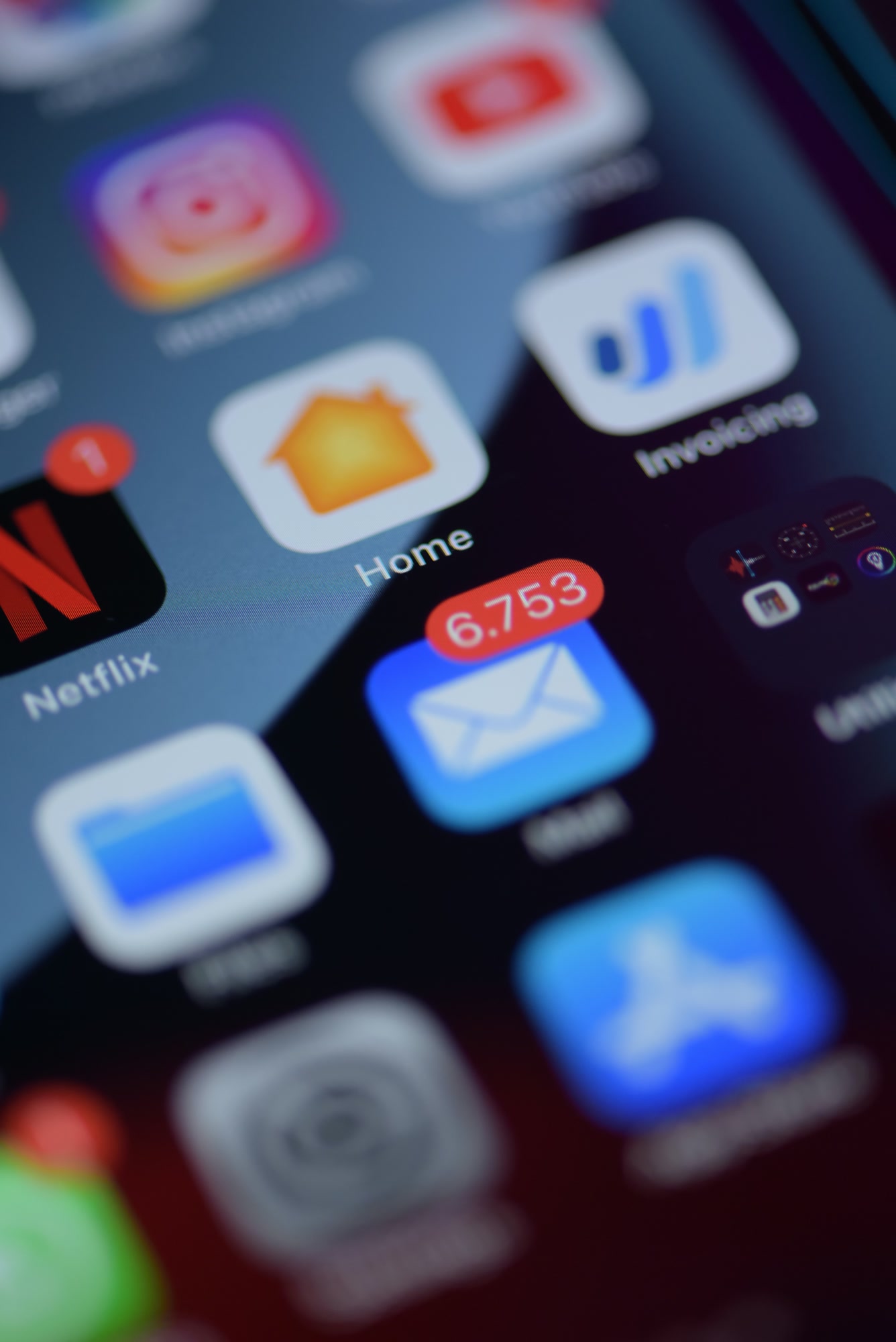
Email Sorter: Stop Drowning in Your Inbox in 2026
A good email sorter doesn't just organize messages — it reclaims hours of your week. Here's what actually works, what doesn't, and what to look for.
The average professional receives 121 emails per day, according to a 2023 Radicati Group report — and that number has only climbed since. I hit my personal breaking point in Q1 2025 when I opened my inbox on a Monday morning and found 847 unread messages after a four-day weekend. Three of them were genuinely urgent. The rest was noise.
TL;DR — Key Takeaways
- Rule-based email sorters work until your patterns change — then they break silently and you don't notice for weeks.
- AI-powered sorting that learns from behavior outperforms static filters for anyone receiving 50+ emails daily.
- The best email sorters in 2026 combine classification, spam blocking, and summarization — not just folder routing.
- Icebox's smart classification handles all of this natively; tools like Superhuman and Spark do parts of it but require more manual configuration.
- Multilingual inbox sorting (22 languages in Icebox's case) is a genuine differentiator for international teams — most competitors still default to English-only logic.
What an Email Sorter Actually Does (vs. What People Think It Does)
Most people hear "email sorter" and picture Gmail's Priority Inbox — a simple two-bucket split between important and everything else. That's sorting in name only. A real email sorter does classification, not just sequencing.
Classification means understanding what an email is before deciding where it goes. Is this a newsletter you subscribed to six years ago and never open? A client reply that needs a response within the hour? An automated billing notification that's safe to archive? The distinction matters enormously. Routing everything into folders based on sender domain — the classic Gmail filter approach — doesn't answer those questions. It just moves the clutter somewhere else.
I spent about eight months over 2024–2025 testing different approaches. First tried building elaborate Gmail filter trees. Worked okay for six weeks, then a client changed their email domain and three months of messages silently landed in the wrong place. Not ideal.
Rule-Based vs. AI-Powered Sorting: A Honest Comparison
Rule-based email sorters — including native Gmail filters, Outlook rules, and most third-party filter builders — operate on explicit conditions you define. If sender contains "newsletter@", move to Promotions. If subject contains "URGENT", flag it. The logic is transparent and auditable, which is genuinely valuable in regulated industries.
The problem is brittleness. Rules don't adapt. The moment your communication patterns shift — new clients, new role, new vendor relationships — the rules fall behind. You don't usually notice until something important gets buried.
Static filters are like a highway that was perfectly designed for 1999 traffic patterns. They work great — right up until the city changes.
Productivity researcher Cal Newport, paraphrased from Deep Work
AI-powered email sorters — Icebox's smart classification, Superhuman's triage system, Spark Mail's priority algorithm — take a different approach. They model the behavior of your inbox over time: which emails you open first, which you archive without reading, which generate replies. The sorting reflects your actual priorities rather than the priorities you thought you had when you wrote the rules.
The tradeoff is explainability. You can't always see why an AI sorter routed something a particular way. For most professionals, that's an acceptable cost. For legal, healthcare, or compliance teams, it may not be — in which case a hybrid approach (AI classification with human-readable audit logs) is worth seeking out. Icebox's CASA Tier 2 security certification addresses some of this concern for enterprise buyers specifically.
What Should a Good Email Sorter Actually Sort?
This question trips people up more than any other. The instinct is to sort by topic or project. "Put everything from the Johnson account in one folder." That's organizational thinking, not productivity thinking.
What actually saves time is sorting by required action and urgency. The categories that matter:
- Needs your reply today — real humans waiting on you, time-sensitive decisions
- Needs your reply eventually — legitimate correspondence with no immediate deadline
- FYI only — newsletters, updates, digests you chose to subscribe to
- Automated noise — receipts, confirmations, system notifications
- Spam and cold outreach — things that should never have reached you
Icebox's classification maps directly onto these buckets, with the blackhole feature handling the last category by blocking senders at the domain level rather than just filtering them into a folder you'll eventually have to empty. The distinction matters: filtering moves trash into a smaller bin. Blocking stops trash at the door.
Does an Email Sorter Work If You Get Email in Multiple Languages?
Yes — but only if your tool supports it. This is a genuinely underappreciated problem for international teams and anyone working across markets.
Most AI email sorters were trained predominantly on English-language email data. Their classification accuracy degrades when subject lines are in German, summaries need to parse French idioms, or a client writes half an email in Spanish and half in English. I've tested this personally — Superhuman's AI triage, for example, handles English beautifully but becomes noticeably less reliable with mixed-language threads.
Icebox's multilingual support across 22 languages addresses this directly. The classification and summarization features apply the same logic regardless of the input language — which for a team managing vendor relationships across Europe or Latin America is a practical advantage, not a marketing bullet point.
The Sorting Features That Actually Move the Needle
Summarization
Sorting tells you where an email goes. Summarization tells you whether it's worth reading at all. These two features work together — a good email sorter in 2026 should offer both. Icebox's summarization generates a 2-3 sentence digest of any thread, which means I can process a 47-email back-and-forth with a vendor in about 20 seconds without reading every message. That's not a small thing.
Quarantine vs. Delete vs. Blackhole
Three different mechanisms that people conflate. Quarantine holds suspicious or uncertain mail for review — useful when you don't want to risk losing something legitimate. Delete is permanent removal. Blackhole (Icebox's term) means blocking at the sender level so the email never reaches your inbox in the first place. For persistent spam senders or cold email sequences that ignore unsubscribe requests, blackhole is the only approach that actually works long-term.
Meeting Scheduling Integration
Underrated as a sorting feature, but consider: a huge percentage of back-and-forth email is scheduling. "Are you free Thursday?" "How about 2pm?" "Actually I have a conflict, what about Friday?" An email sorter that can recognize scheduling threads and surface a calendar integration — as Icebox does — converts that entire conversation type into a single action rather than a multi-day thread.
How Does an Email Sorter Compare to Just Using Gmail's Built-In Filters?
Gmail's built-in filters are free, transparent, and well-documented. For someone receiving under 30 emails a day with predictable patterns, they're probably sufficient.
For anyone else, the limitations compound quickly. Gmail filters don't understand context. They can't distinguish between a newsletter from a brand you actually read versus one you haven't opened since 2021. They can't recognize that a reply from a client is more urgent than a reply from a mailing list. And they require ongoing manual maintenance — every new pattern requires a new rule, which requires you to notice the pattern, which requires you to have time to think about your inbox. That's the trap.
Dedicated AI email sorters — whether Icebox, HEY's screening system, or Notion Mail's workspace integrations — break that trap by learning rather than waiting. The sorting improves as they observe your behavior, rather than requiring you to codify your behavior upfront.
The best email organization system is one you don't have to manage.
Merlin Mann, founder of 43 Folders and originator of Inbox Zero
What I'd Look for When Choosing an Email Sorter in 2026
After testing six tools extensively over the past 18 months, these are the criteria that actually differentiated the good from the adequate:
- Accuracy on first week, without training data — tools that require months to learn before becoming useful aren't practical for busy teams.
- Handles mixed-language inboxes gracefully — critical for anyone with international contacts.
- Offers blocking, not just filtering — filtering spam is playing defense; blocking stops the game.
- Integrates summarization alongside sorting — sorting tells you where to look; summarization tells you what you're looking at.
- Has a clear security posture — look for certifications (CASA Tier 2, SOC 2) rather than vague privacy promises.
- Works across devices and clients — an email sorter that only functions in the desktop app is an incomplete solution.
Worth noting: no single tool checks every box perfectly. Superhuman has better keyboard shortcuts and a faster UI than most. HEY's "Imbox" concept is genuinely clever for first-contact filtering. Notion Mail integrates tightly with Notion workspaces, which matters if that's your team's operating system. Icebox's edge is the combination of AI-powered classification, multilingual support, aggressive spam blocking via blackhole, and the CASA Tier 2 security certification — particularly relevant for enterprise buyers who need to clear compliance reviews before deploying new tools.
If your inbox is costing you more than 90 minutes a day to process — which is the threshold where research from McKinsey's 2023 workplace productivity report suggests intervention becomes economically justified — an AI email sorter pays for itself within weeks.
The sorting problem isn't going away. Email volume keeps rising, and AI-generated outreach means the noise floor is getting higher every quarter. The professionals who deal with this well in 2026 won't be the ones with the most discipline — they'll be the ones with the right infrastructure. Start there.
Try Icebox free at icebox.cool — the smart classification and blackhole features are available from day one, no training period required. See how much quieter your inbox gets by Friday.