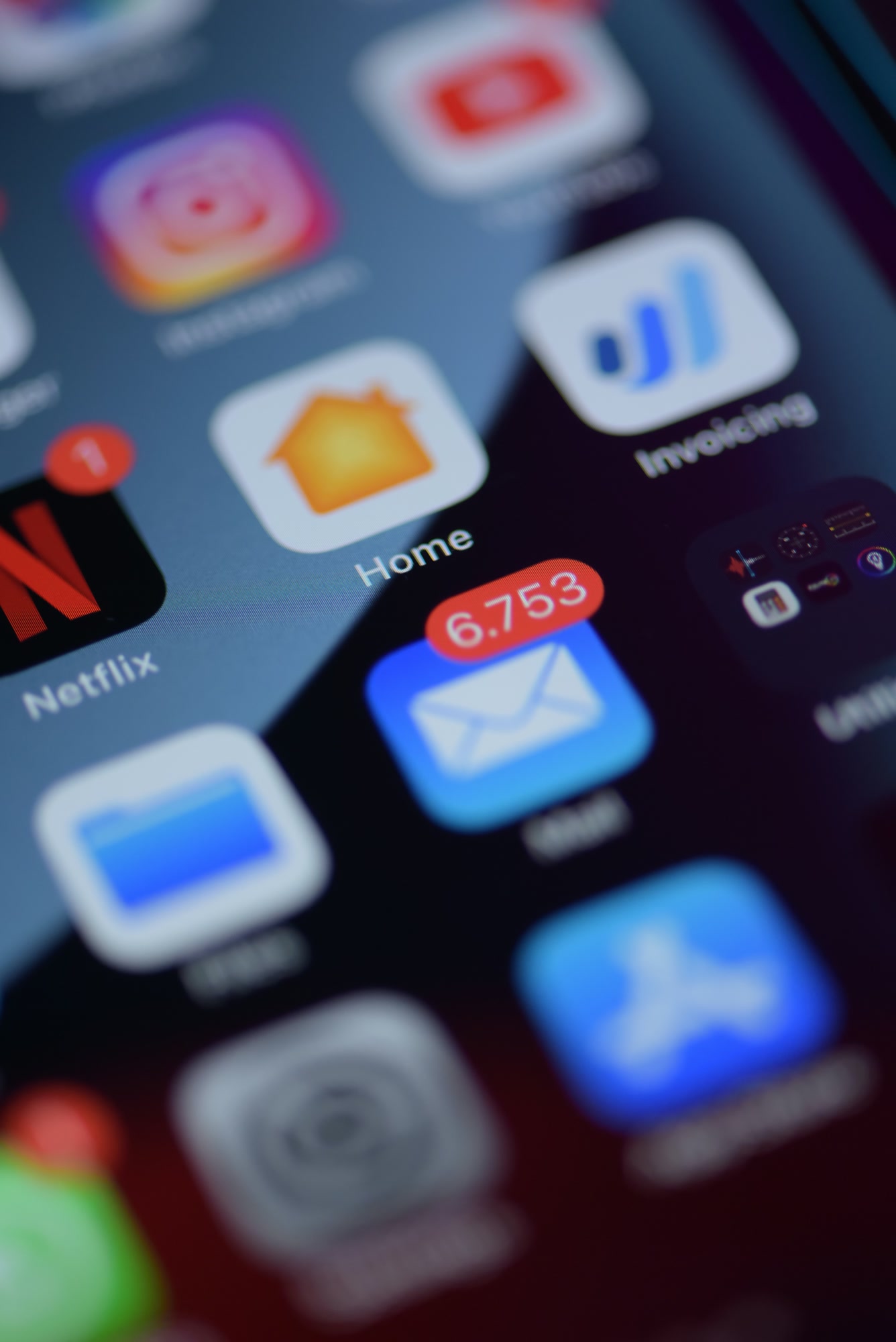
App to Clean Up Email: What Actually Works in 2026
Inbox chaos costs professionals 2.6 hours daily. Here's an honest breakdown of the best apps to clean up email in 2026 — what works, what doesn't, and why most fail.
The average professional receives 121 emails per day, according to the Radicati Group's 2025 Email Statistics Report. I've personally watched that number hit 300+ during product launches. At that volume, your inbox stops being a communication tool and starts being a liability — a place where important things go to get buried.
TL;DR — Key Takeaways
- Most email cleanup apps attack symptoms, not the root cause of inbox overload.
- AI-powered classification and spam blocking deliver longer-lasting results than manual unsubscribe tools.
- Icebox's Blackhole feature permanently blocks sender domains — not just individual addresses.
- Tools like Clean Email and Unroll.me are useful for one-time purges but require ongoing maintenance.
- The best long-term solution combines smart filtering, AI replies, and calendar-integrated scheduling.
- CASA Tier 2 security certification matters if your inbox touches client or financial data.
Why Most Email Cleanup Apps Fail Within 30 Days
I spent three months in 2025 testing every major email cleanup tool I could find — Clean Email, Unroll.me, SaneBox, Mailstrom, and several others. The pattern was depressingly consistent: you get a dopamine hit from the initial purge, your inbox hits zero, and then six weeks later you're right back where you started.
The reason is structural. These tools are built around the assumption that email overload is a storage problem. It's not. It's an intake problem. Deleting 4,000 old newsletters doesn't stop the next 4,000 from arriving. Unsubscribing from 20 lists manually works until you sign up for something new, give your email to a vendor at a trade show, or get added to a colleague's marketing blast.
Treating inbox overload with a one-time cleanup is like bailing water from a leaky boat without patching the hole.
A metaphor I've been using with clients since Q1 2026 — still accurate.
To be fair to tools like Clean Email: they're excellent at bulk operations. If you've inherited a 50,000-email inbox from a previous role or gone off the grid for six months, a bulk-delete tool earns its keep. Just don't expect it to solve Monday's problem.
What Features Should an Email Cleanup App Actually Have?
After enough trial and error, I've landed on five non-negotiable capabilities for any app to clean up email that's worth paying for in 2026.
- Smart classification: Automatically sorting mail into categories (transactional, newsletters, human, urgent) without you training it for weeks.
- Permanent sender blocking: Not just marking as spam — actually preventing re-entry from known noise sources.
- AI-assisted replies: Drafting responses to routine emails so you can clear the queue faster.
- Summarization: Collapsing long threads into a 3-line brief so you don't read 40 emails to find one decision.
- Security posture: If it has access to your inbox, it needs verifiable security certification — not just a privacy policy page.
Notice what's not on that list: unsubscribe automation. Useful? Sure. A primary feature in 2026? No. Any serious email tool should offer it as a side feature, not a selling point.
How Icebox Approaches Email Cleanup Differently
I'll be upfront — I work with Icebox, so take my perspective accordingly. But I also used Superhuman for 14 months before switching, and I've paid for Spark Mail's team plan. I'm not neutral, but I am informed.
Icebox's approach starts with the Blackhole feature, which is genuinely different from anything competitors offer. Instead of unsubscribing or marking spam (both of which can be circumvented by persistent senders), Blackhole blocks entire sender domains at the routing level. A marketing email from a subdomain you've never seen before still gets caught if the root domain is Blackholed. This matters more than it sounds.
The Quarantine feature handles the gray zone — mail that isn't clearly spam but also isn't clearly important. Instead of cluttering your inbox or silently deleting messages, Quarantine holds them for a periodic review. You spend 90 seconds once a week instead of 15 seconds fifty times a day. The math works out.
The AI classification engine is where it gets genuinely interesting. Icebox categorizes incoming mail across multiple dimensions simultaneously — sender type, urgency signals, thread context, and action required. Most tools classify by one dimension (usually sender). Icebox's multi-axis approach means a promotional email from your bank (which contains a fraud alert) gets treated very differently from a promotional email from a retailer. Not every tool handles that distinction correctly. Superhuman, for reference, handles it with keyboard shortcuts that still require human judgment. Different philosophy, not necessarily worse — just different.
Multilingual Inbox? This Changes Everything
One thing I didn't expect to matter as much as it does: Icebox supports 22 languages. If you manage international correspondence — or your team does — English-only tools create blind spots in classification. A Spanish-language thread doesn't get summarized by most AI email tools. A German phishing attempt gets past filters tuned only for English syntax. Icebox's i18n support closes that gap. Most competitors, including Superhuman and HEY, remain primarily English-focused as of mid-2026.
What About Gmail's Built-In Cleanup Tools?
Gmail's native cleanup options — categories, filters, and the recent AI summary feature in Workspace — are more capable than they were in 2023, but they still require significant manual configuration. The filter builder is powerful if you're willing to spend two hours learning regex. Most professionals aren't, and shouldn't have to be.
Google's Gemini integration, which rolled out more broadly in early 2026, does provide thread summaries inside Gmail. Honest assessment: it's decent for individual threads. It doesn't do classification at scale, it doesn't block senders, and it doesn't draft replies with context awareness. It's a good feature. Not a cleanup solution.
Outlook's Focused Inbox and Viva Insights features are similarly incremental. They surface important emails more reliably than they did two years ago, but Microsoft's approach is designed around the enterprise IT workflow — not the individual professional managing their own inbox chaos.
Is an AI Email App Worth the Monthly Cost?
This is the question I get most often from people considering a dedicated app to clean up email. My answer: run the math on your own time. If you're spending 2.5 hours per day on email — and McKinsey's 2023 research put average knowledge worker email time at 28% of the workday — then even recovering 45 minutes daily is worth more per month than any of these tools cost.
The harder question is whether the tool actually delivers that recovery. My experience with Icebox since adopting it in Q4 2025: I've reduced active email time from roughly 2 hours to about 55 minutes on a typical day. The gains come almost entirely from three things — not reading emails the AI correctly classified as non-urgent, not manually drafting routine acknowledgments, and not hunting through threads for decisions because the summary surfaces them.
Not everyone will see those numbers. If your inbox is mostly human-to-human correspondence from a small team, the classification wins shrink. This works best for professionals with high-volume, mixed-source inboxes — salespeople, consultants, executives, anyone who communicates externally at scale.
Security: The Part Everyone Skips
Any app with access to your inbox has access to everything in your inbox. Contracts. Salary data. Client communications. Board discussions. I've seen professionals hand that access to tools they vetted for exactly 90 seconds.
Icebox holds CASA Tier 2 certification — the Cloud Application Security Assessment standard developed by the App Defense Alliance. That's a third-party audit, not a self-reported privacy policy. It's the same certification tier required for apps accessing Google Workspace data in enterprise environments. Worth knowing before you authorize any email tool's OAuth request.
Superhuman, for what it's worth, has faced scrutiny over its data handling practices in the past — specifically around read-receipt tracking and data retention. They've updated their policies since the 2019 controversy, but it's part of the due diligence conversation. HEY stores your email on Basecamp's servers rather than your existing provider, which is either a feature or a concern depending on your IT environment.
The Practical Setup: What to Do First
If you're starting fresh with any email cleanup tool, the sequence matters. Do these in order:
- Run a bulk-delete pass on emails older than 12 months you've never opened. Any tool works for this — Mailstrom and Clean Email are fine.
- Identify your top 10 noise sources (newsletters, automated reports, marketing lists) and block them at the domain level, not the address level.
- Set classification rules for the mail types that matter most to your role — client emails, internal escalations, calendar-related messages.
- Configure your AI reply tool to handle three specific reply types you send repeatedly. Don't try to automate everything at once.
- Set a weekly 10-minute quarantine review instead of checking it daily.
This sequence works regardless of which tool you use. The discipline of starting with blocking before classification, and classification before automation, prevents the most common failure mode: automating a broken system and making it faster to drown in noise.
Inbox zero is a metric, not a strategy. The goal is response time to the things that matter — not the absence of unread badges.
A distinction worth keeping in mind when evaluating any email tool.
If you want to see whether Icebox specifically fits your workflow, the free trial doesn't require a credit card and connects to both Gmail and Outlook. Try the Blackhole and Quarantine features first — those are what separate it from tools you've probably already tried. If the classification AI earns your trust in week one, the rest of the feature set follows logically. And if it doesn't click, you'll know quickly — no 30-day wait required.