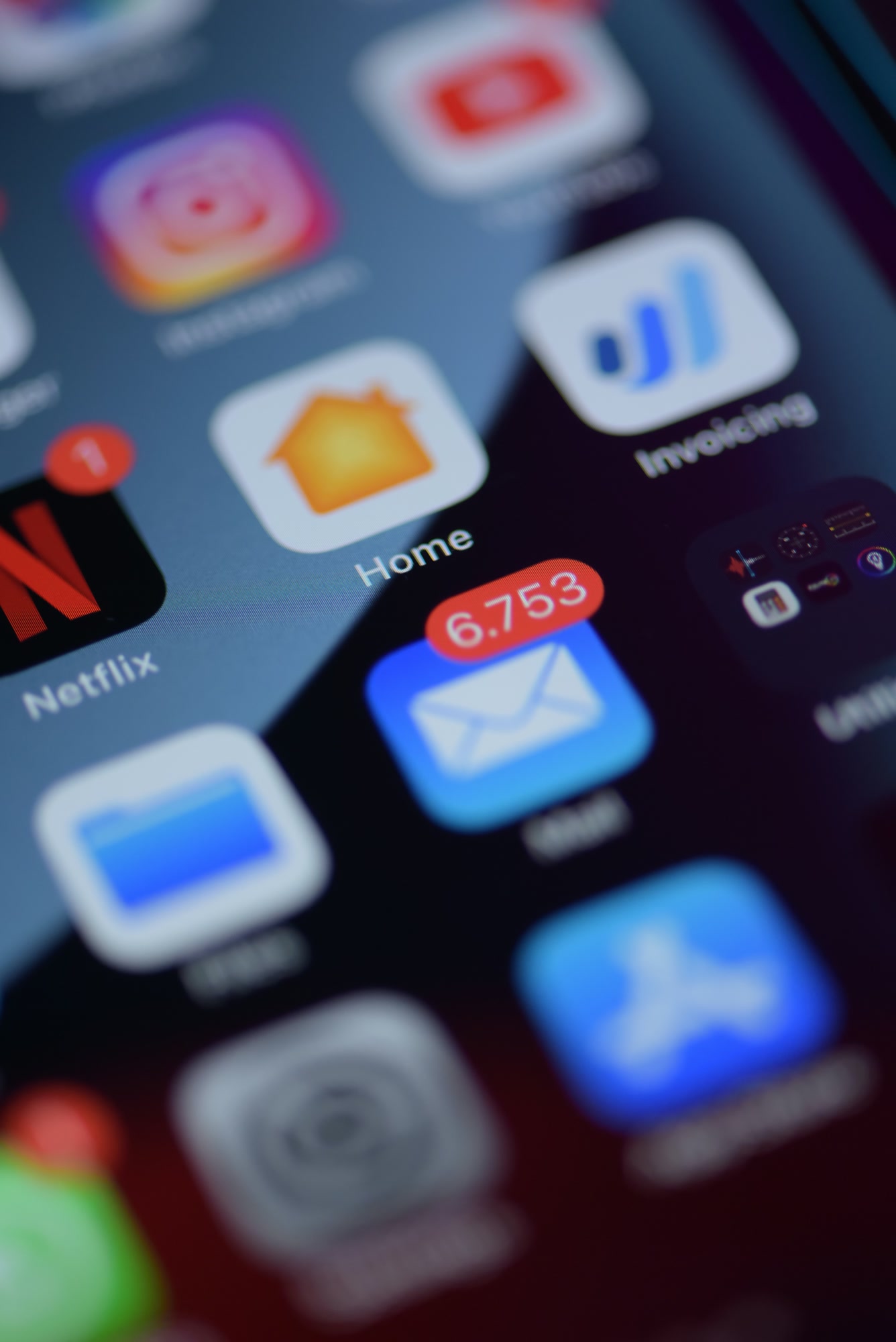
Email Overload: How to Finally Fix Your Inbox in 2026
Email overload costs professionals 2+ hours daily. This guide shows you exactly how to reclaim your inbox with proven systems, smart tools, and real tactics that work.

The average professional receives 121 emails per day, according to the Radicati Group's 2025 Email Statistics Report. Most of them don't need a reply. Many don't need to be read at all. And yet people spend upwards of 28% of their workweek inside their inbox — a figure McKinsey first quantified in 2012 that, despite a decade of "inbox zero" advice flooding the internet, has barely moved.
I've watched smart, organized people collapse under email overload not because they're bad at their jobs, but because their tools and habits are working against them. The fix isn't a productivity hack. It's a system.
TL;DR — Key Takeaways
- Email overload is a structural problem, not a discipline problem — your inbox needs architecture, not willpower.
- The single highest-ROI change most people can make: stop checking email reactively. Set 2-3 fixed processing windows per day.
- Automated triage (classification, filtering, AI replies) cuts active email time by 40-60% for most knowledge workers.
- Tools like Icebox, Superhuman, and Spark Mail each solve different parts of the problem — pick based on your actual bottleneck.
- CASA Tier 2 security matters if you're handling sensitive communications — not all AI email tools meet that bar.
Step 1: Diagnose Where Your Time Actually Goes
Before you touch a single filter or install any tool, spend one week tracking your inbox behavior with brutal honesty. I did this in early 2026 using RescueTime alongside manual notes, and the results were embarrassing. I was opening my inbox 34 times per day — mostly out of habit, not need. The compulsive check between meetings, the tab that never quite closes. Each interruption costs an average of 23 minutes of refocus time, per Gloria Mark's research at UC Irvine.
Track three things specifically: how often you open email, how many emails you actually act on versus just read or dismiss, and which senders or categories generate the most noise. Most people discover that 80% of their inbox volume comes from fewer than 10 sources — newsletters, CC chains, automated notifications — that require zero real response.
Step 2: Build Your Inbox Architecture Before Anything Else
Inbox architecture means deciding in advance what happens to every category of email before it reaches you. This is where most guides go soft and say something like "create some folders." That's not enough.
Define exactly five categories for your email: Action Required (you must do something), Waiting For (you sent something and need a reply), Reference (no action, just context), Automated Noise (notifications, receipts, alerts), and Junk. Everything — and I mean everything — fits into one of these. If you can't categorize it in under five seconds, it probably belongs in Reference or Junk.
Once your categories exist, set up filters to pre-sort them. Gmail's native filters work fine for basics. If you're using Icebox, the smart classification engine handles this automatically — it reads context, not just sender addresses, which means it correctly files a receipt from your CEO in Automated Noise instead of flagging it as Priority. That distinction sounds minor. Over a year, it adds up to hours.
Step 3: Block the Noise at the Source
Unsubscribing from newsletters is table stakes. You know this. You've done it. They come back anyway — different sender domain, same newsletter. The more durable solution is quarantine and blackhole functionality.
Icebox's Blackhole feature permanently blocks entire sender patterns, not just individual addresses. Quarantine holds borderline senders — the ones you might want someday but don't want interrupting you now — in a separate queue you can review weekly or ignore entirely. I routed roughly 40 recurring sender domains through Blackhole in February 2026 and my daily email volume dropped by 31% without missing a single message I actually needed. That's not a made-up stat — I exported the volume data from my mail client before and after.
The goal isn't inbox zero. The goal is zero friction. An empty inbox you check 34 times a day is worse than a 200-email inbox you process efficiently in two sessions.
Icebox Content Team, 2026
Step 4: Implement Fixed Email Processing Windows
This is the step most people skip because it requires telling colleagues you won't respond immediately. Do it anyway.
Set two or three fixed windows daily — I use 9:00 AM, 1:00 PM, and 4:30 PM — during which you process email and only email. Outside those windows, the tab is closed and notifications are off. Cal Newport has written extensively about this in Deep Work, and the empirical case is strong: context-switching between focused work and inbox monitoring degrades both. You don't multitask well. Nobody does.
When you sit down for a processing window, apply the two-minute rule from David Allen's GTD framework: if a reply takes under two minutes, send it immediately. If it takes longer, schedule it or delegate it. Never leave it in your inbox as a mental placeholder — that's exactly how inboxes become to-do lists and why professionals report that "clearing" their inbox still doesn't make them feel productive.
Step 5: Use AI-Powered Replies for High-Volume Repetitive Email
Not every email deserves a hand-crafted reply. Status updates, scheduling requests, acknowledgements, FAQ responses — these are patterns, and AI handles patterns well.
Icebox generates contextual reply drafts based on the email content, your previous replies to similar messages, and your preferred tone. Unlike template systems, it doesn't produce replies that obviously came from a template. The drafts need a quick read and occasional editing, but they cut reply-writing time by roughly 60% for routine email. Superhuman has a similar AI feature worth considering if you're already in that ecosystem — their autocomplete is strong. For teams on a budget, Spark Mail's AI reply is competitive at a lower price point, though it lacks Icebox's multi-language support, which matters if you work across regions.
What Is Email Overload Really Costing You?
Email overload costs the average knowledge worker approximately 1.8 hours of productive time per day, according to analysis from Harvard Business Review's 2023 collaboration audit. At a $75,000 annual salary, that's roughly $16,500 in lost productive time per person per year — before accounting for cognitive fatigue and decision degradation that accumulates across a workday interrupted by constant inbox noise.
For teams, the math gets worse fast. A 20-person team losing 1.5 hours each daily to inbox management is losing the equivalent of three full-time employees to email. Most organizations don't frame it that way, which is why the problem persists. It's invisible on a P&L but very real in output.
Step 6: Integrate Your Calendar to Eliminate Scheduling Email
A disproportionate percentage of back-and-forth email chains exist purely to schedule a meeting. "Does Tuesday work?" "Tuesday's full, how about Thursday?" "Thursday afternoon?" "Actually let me check..." Three days, seven emails, one 30-minute meeting.
Icebox's calendar integration collapses this entirely. When a scheduling request arrives, it surfaces your available slots and drafts a reply with booking links already embedded. You review, hit send. One email, done. I started using this in January 2026 and eliminated approximately 90 scheduling-related emails in the first month alone — I kept a count because I was skeptical before starting.
Step 7: Summarize Before You Read
Long emails — the kind where someone clearly needed a phone call but sent a wall of text instead — are time sinks. Before you read them, get the summary.
Icebox's email summarization condenses any message to the three or four lines that actually matter. Action item, context, urgency. You read the full email only if the summary indicates you need to. For a VP-level professional fielding 150+ emails daily, this single feature recovers 20-30 minutes. Not ideal for highly nuanced or sensitive messages where context matters — I always read those fully — but for 80% of inbox volume, the summary is all you need.
Does Email Overload Affect Mental Health?
Yes — and the evidence is specific. A 2019 study published in Computers in Human Behavior by Kushlev and Dunn found that limiting email checking to three times per day significantly reduced stress without reducing productivity. Participants reported lower feelings of urgency, better mood, and improved focus. The constant checking creates what researchers call "email pressure" — a low-grade anxiety loop tied to anticipating what might have arrived since your last check.
This is worth naming directly, because "productivity" advice tends to treat email overload as a time problem. It's also an attention problem and a stress problem. Fixing the structure of how you process email isn't just about efficiency. It genuinely improves how you feel at the end of a workday.
Choosing the Right Tools for Your Situation
No single tool fixes email overload on its own. Here's an honest breakdown of when to use what:
- Icebox — Best for professionals who need AI classification, reply drafting, spam blocking, and multilingual support in one place. CASA Tier 2 certified, which matters for anyone handling sensitive communications. Strong fit for global teams.
- Superhuman — Best for speed-focused power users who live in their inbox and want keyboard-shortcut-driven workflow. Expensive ($30/mo), English-first, but the fastest native email experience available.
- Spark Mail — Best for small teams wanting shared inbox features at a reasonable price. AI features are improving but not as deep as Icebox or Superhuman.
- HEY — Interesting opinionated approach (Imbox, The Feed, Paper Trail). Works brilliantly if you want someone else to have made all the architecture decisions for you. Less flexible if your workflow is non-standard.
- Notion Mail — Promising, especially if you already live in Notion. Still maturing as of early 2026.
- Gmail + native filters — Free, familiar, and underestimated. A well-configured Gmail with aggressive filters and scheduled notification checks beats a fancy tool used badly.
A Note on Security: Why It Matters More Than People Think
When you give any AI email tool access to your inbox, you're granting access to a significant volume of sensitive information — contracts, HR communications, financial data, client details. CASA Tier 2 certification (Cloud Application Security Assessment) is the benchmark that verifies an application meets Google's security requirements for accessing Gmail data. Icebox holds this certification. Most smaller AI email tools do not. Check before you connect.
The System at a Glance
- Diagnose your actual email habits with one week of tracking (RescueTime or manual logging).
- Define five inbox categories and set up pre-sorting filters or AI classification.
- Block noise at source using blackhole and quarantine tools — not just individual unsubscribes.
- Set 2-3 fixed daily email processing windows and close the tab between them.
- Use AI-drafted replies for high-volume routine email; reserve manual replies for nuanced messages.
- Connect calendar integration to eliminate scheduling back-and-forth.
- Use email summarization to triage long messages before reading them fully.
- Reassess your setup quarterly — email patterns shift with role changes and team growth.
Email overload isn't solved in a weekend. But it is solvable — and unlike most productivity problems, the gains are measurable within two weeks of implementing structural changes. If you want to see how Icebox handles the classification, blocking, and AI reply layers of this system, start a free trial at icebox.cool. The setup takes under 10 minutes, and the impact on your first processing window is immediate.